
Some directors become closely associated with a genre. Naruebet “Boss” Kuno has done something more interesting: he has repeatedly returned to queer characters while refusing to tell the same kind of story twice.
In I Told Sunset About You, two teenage boys struggle to understand what they mean to each other beneath the heat and color of Phuket. In The Paradise of Thorns, an adult gay man’s grief becomes inseparable from property, labor, inheritance, and the legal precarity of a relationship the state did not recognize. With Gelboys, Boss turned toward a younger, digitally fluent generation whose romantic lives unfold through phones, labels, beauty culture, and constantly shifting definitions of intimacy.
The settings, ages, and tones change, but a recognizable creative perspective connects them. Boss Kuno’s queer stories are grounded in specific places, populated by deeply imperfect people, and shaped by the social realities surrounding their relationships.
Before the sunset
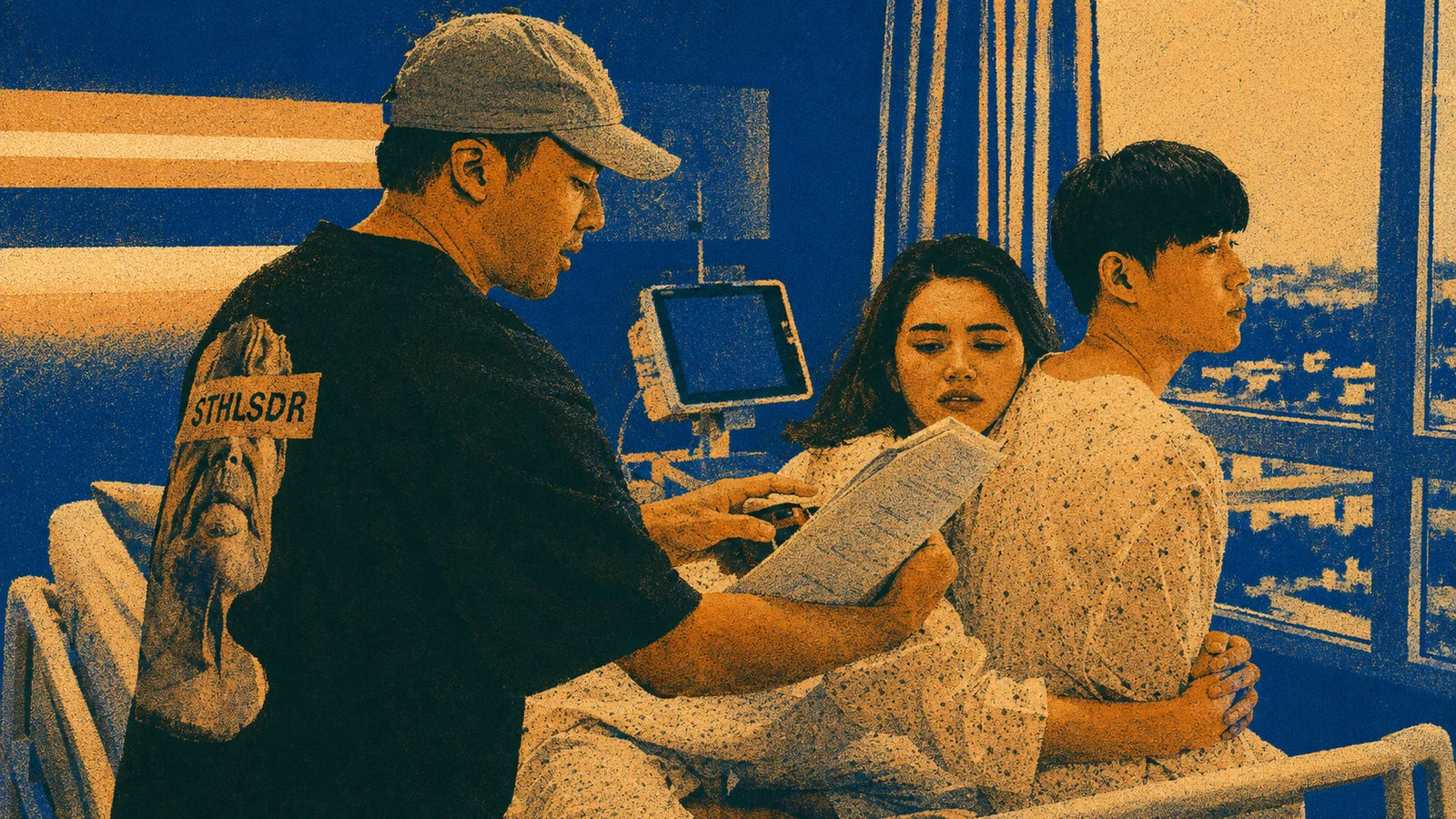
Boss Kuno’s career did not begin with BL.
His early television work included writing and co-directing Hormones 3: The Final Season and I Hate You, I Love You, two youth-focused productions built around complicated relationships and characters whose mistakes could not be neatly divided into right and wrong.
He later directed and co-wrote the Side by Side installment of Project S: The Series, followed by the fantasy romance My Ambulance. These projects helped establish his interest in emotionally volatile young characters, close interpersonal relationships, and stories that balance accessible entertainment with heavier personal or social themes (Wikipedia).
It was also through My Ambulance that audiences responded strongly to Billkin Putthipong Assaratanakul and PP Krit Amnuaydechkorn. Rather than forcing their characters into a continuation of that story, Boss developed a separate project centered on a relationship between two teenage boys.
That project became I Told Sunset About You.
I Told Sunset About You: desire before definition
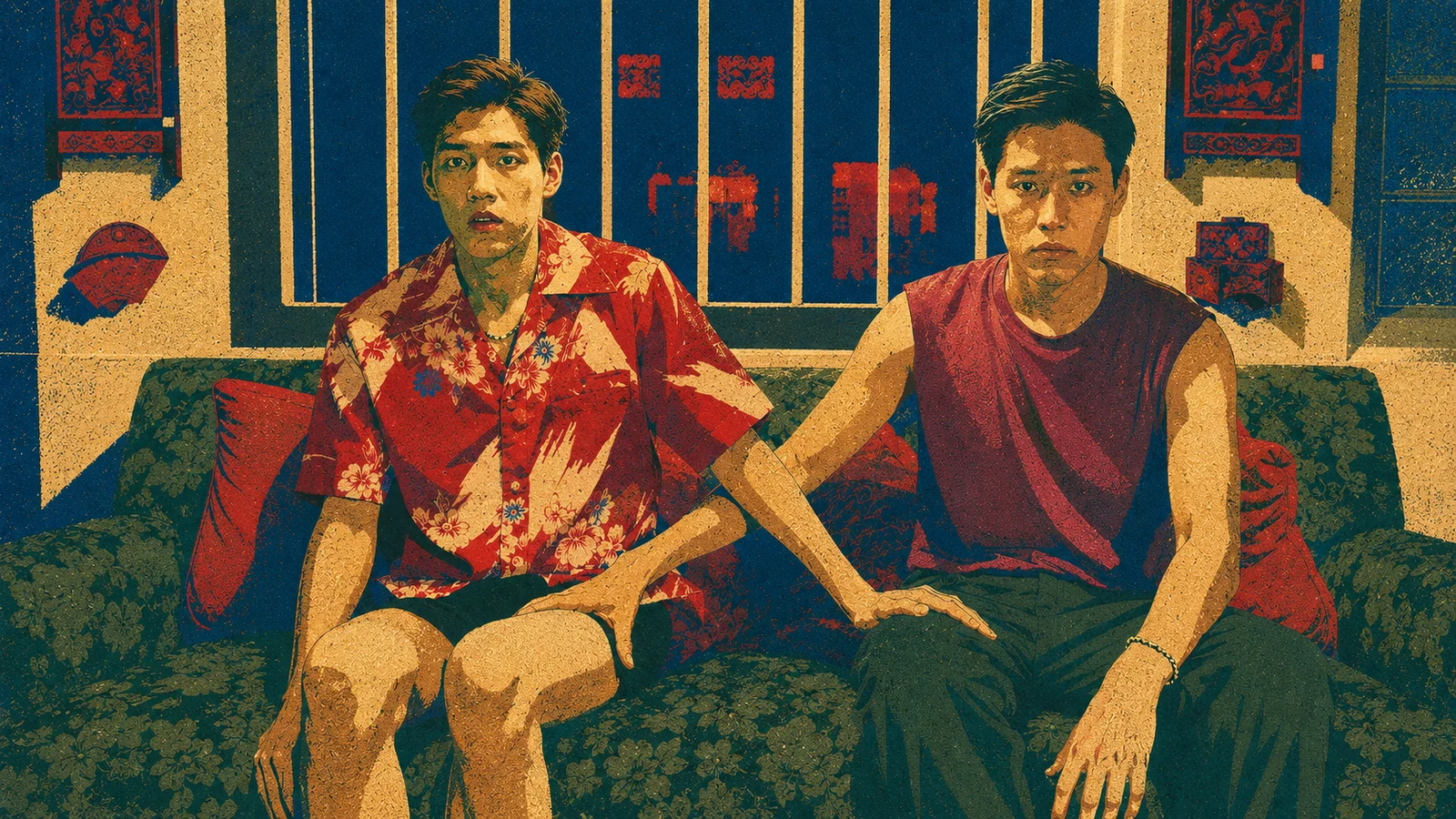
Released in 2020, I Told Sunset About You follows former childhood friends Teh and Oh-aew as they reconnect while preparing for university admissions in Phuket.
Their relationship develops through rivalry, resentment, tenderness, jealousy, and desire. Neither character enters the story with the emotional vocabulary needed to explain what is happening between them. Much of the drama comes from the distance between what they feel, what they understand, and what they are prepared to admit.
Boss directed and co-wrote the first part of the story, creating a coming-of-age drama in which sexuality is not treated as a single revelation followed by immediate clarity. Teh’s attraction to Oh-aew collides with his existing ideas about himself, his future, and how other people see him. His uncertainty makes him frightened and frequently hurtful.
That willingness to let queer characters behave badly is central to the series’ emotional power. Teh and Oh-aew are not presented as idealized representatives. They are teenagers who want contradictory things and sometimes cause damage while trying to understand themselves.
Phuket is equally important to the story. Its streets, beaches, shrines, schools, and Chinese-Thai cultural influences give the series an identity inseparable from its setting. The location is not simply picturesque scenery. It holds the characters’ shared history and becomes part of the emotional language through which their relationship is expressed.
The result helped establish I Told Sunset About You as a major work in contemporary Thai LGBTQ+ storytelling and brought Boss Kuno international recognition beyond his earlier television projects (Koktail Media).
Love expressed through place

Across Boss Kuno’s queer work, locations often carry the history of a relationship.
In I Told Sunset About You, Phuket holds the memory of Teh and Oh-aew’s childhood friendship, separation, and reconciliation. Familiar streets become emotionally charged because of what happened there and who the characters were when they first occupied them.
That approach becomes even more material in The Paradise of Thorns.
The 2024 film centers on Thongkam, who built a home and durian orchard with his partner, Sek. After Sek dies, the absence of legal marriage recognition leaves Thongkam vulnerable to the claims of Sek’s family.
The orchard is therefore more than property. It represents years of shared labor, sacrifice, and imagined permanence. Losing it would mean losing both financial security and the physical evidence of the life the couple created.
Boss has explained that the durian setting interested him partly because farmers in a poor region spend years cultivating one of Thailand’s most expensive fruits. That contradiction allowed the orchard to embody devotion, hardship, class, and the value assigned to labor (Tatler Asia).
The Paradise of Thorns: what happens after love?
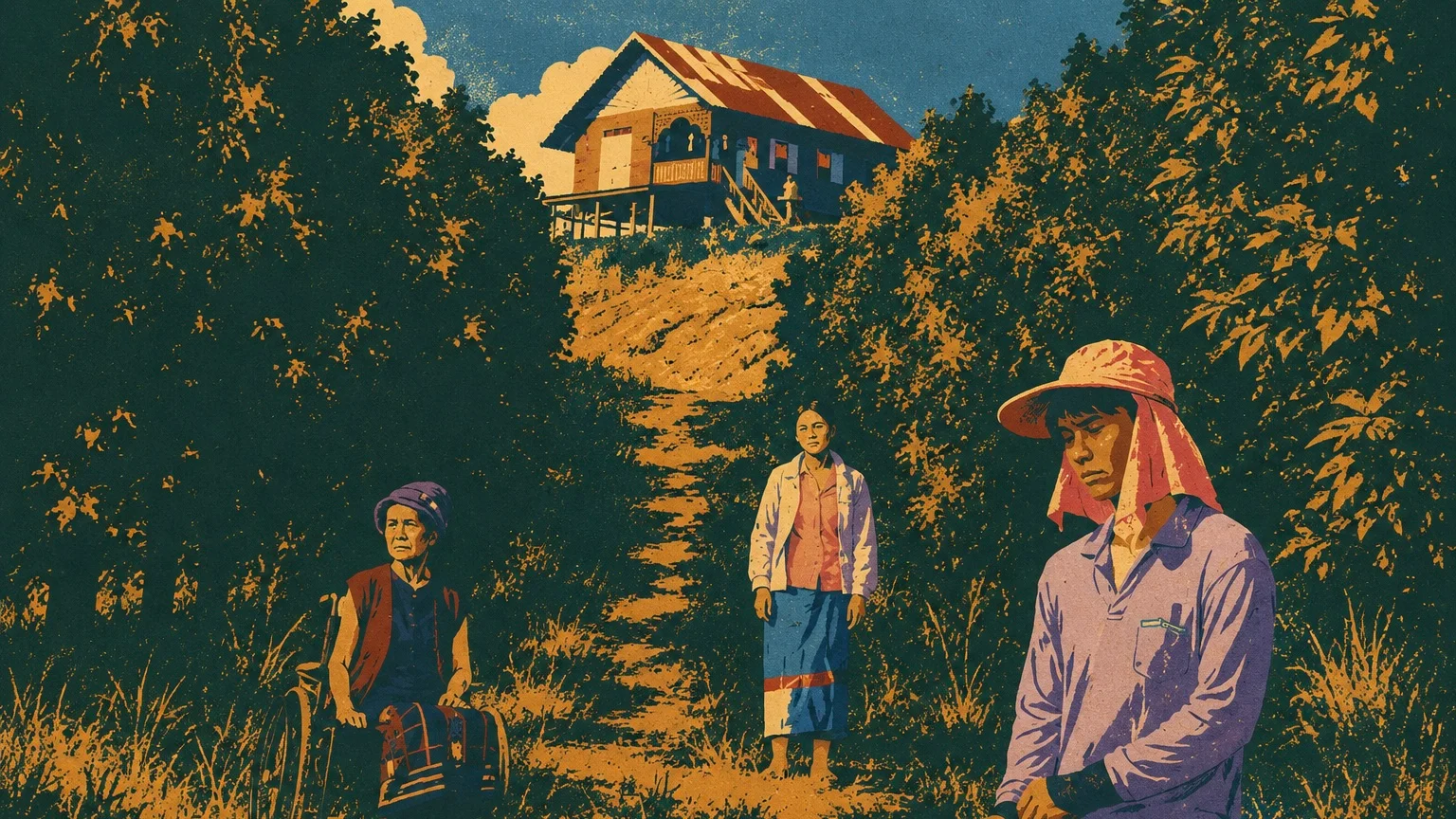
Boss has described The Paradise of Thorns as emerging partly from questions about what the boys of I Told Sunset About You might face later in life.
What would happen after they grew older? What protections would their relationship have? What would remain if one of them died?
Those questions led him toward same-sex marriage, inheritance, and the consequences of a relationship that may be emotionally real but legally fragile (OneLashShot).
The film moves beyond the internal struggle of recognizing queer desire and instead examines the structures surrounding an adult queer partnership. Thongkam’s conflict is not primarily about whether he can accept loving another man. It is about whether the home, business, and future they built together will be acknowledged as his.
That distinction marks an important progression in Boss Kuno’s work. Queer coming-of-age does not necessarily end when a person identifies their sexuality or begins a relationship. Adulthood brings new questions involving money, family, power, ownership, and legal recognition.
The film also refuses to make suffering morally simple. Grief does not automatically make its characters virtuous. Poverty does not prevent cruelty. Love does not remove the desire for revenge, control, or survival.
As in I Told Sunset About You, Boss allows queer characters to be emotionally complicated rather than symbolically perfect.
Gelboys: growing up while always online
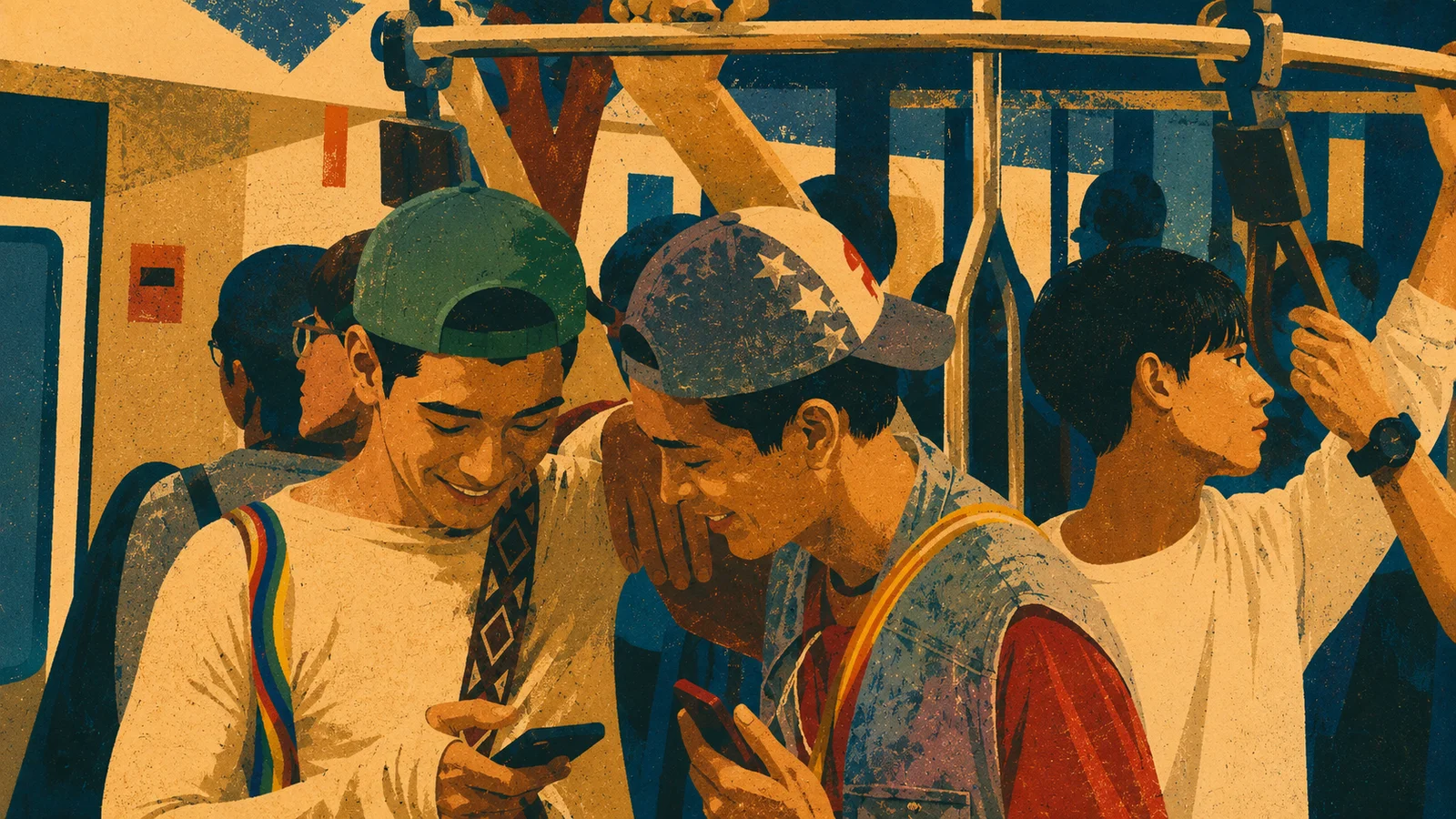
With Gelboys, Boss returned to teenage relationships, but not to the emotional or cultural environment of I Told Sunset About You.
Premiering in 2025, the series follows young queer characters navigating attraction, friendship, jealousy, and uncertain relationship statuses in contemporary Bangkok. Boss served as writer, director, and producer on the series (Wikipedia).
The characters live through their phones. Their relationships are communicated, displayed, interpreted, and disrupted through digital platforms. Social media does not merely appear as a prop; it shapes how they understand attention and intimacy.
This generation has access to more language around sexuality and relationships than Teh and Oh-aew did. They may be more comfortable presenting queer identities openly or discussing undefined romantic arrangements. That vocabulary, however, does not protect them from uncertainty.
A relationship can still feel real without being officially named. Public confidence can coexist with private insecurity. Greater visibility can create new opportunities for connection while also making rejection, comparison, and jealousy harder to escape.
Beauty culture is another important part of the show’s world. Nail salons, styling, fashion, music, and online presentation contribute to the characters’ identities. These elements are not treated as superficial decoration. They show how the characters build themselves and communicate with one another.
Where I Told Sunset About You frequently emphasizes what its characters cannot say, Gelboys explores a generation that communicates constantly but still struggles to say precisely what matters.
Emotionally imperfect characters
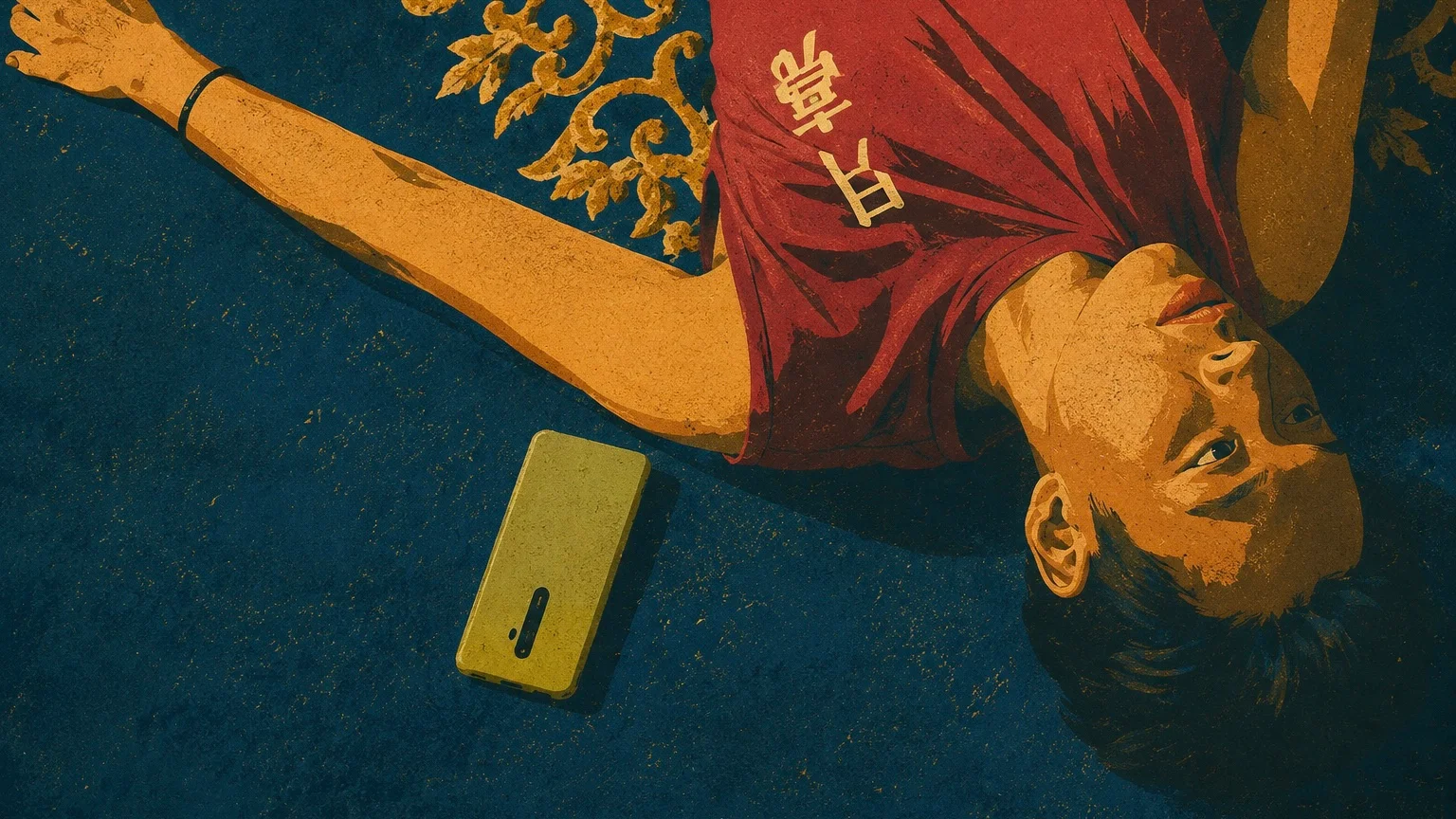
One of the clearest links between Boss Kuno’s projects is his resistance to uncomplicated protagonists.
Teh can be selfish and cowardly. Thongkam’s grief develops into anger and retaliation. The young men of Gelboys make choices based on insecurity, attraction, and incomplete information.
These flaws are not departures from the stories’ queer themes. They are part of them.
Queer characters have often been required either to suffer nobly or represent idealized progress. Boss’s work gives them room to be jealous, manipulative, indecisive, ambitious, affectionate, vindictive, and wrong.
That approach does not mean every action is excused. Instead, the stories remain interested in why people act as they do and what their choices reveal about their needs.
Their conflicts are personal, but they are rarely isolated from the world around them. Family expectations shape Teh’s understanding of his future. Property law determines Thongkam’s vulnerability. Social media influences how the characters of Gelboys experience attention and rejection.
Boss’s characters are not only discovering who they are. They are negotiating the systems, communities, and expectations that define what kinds of lives appear possible.
Queer stories that resist one category
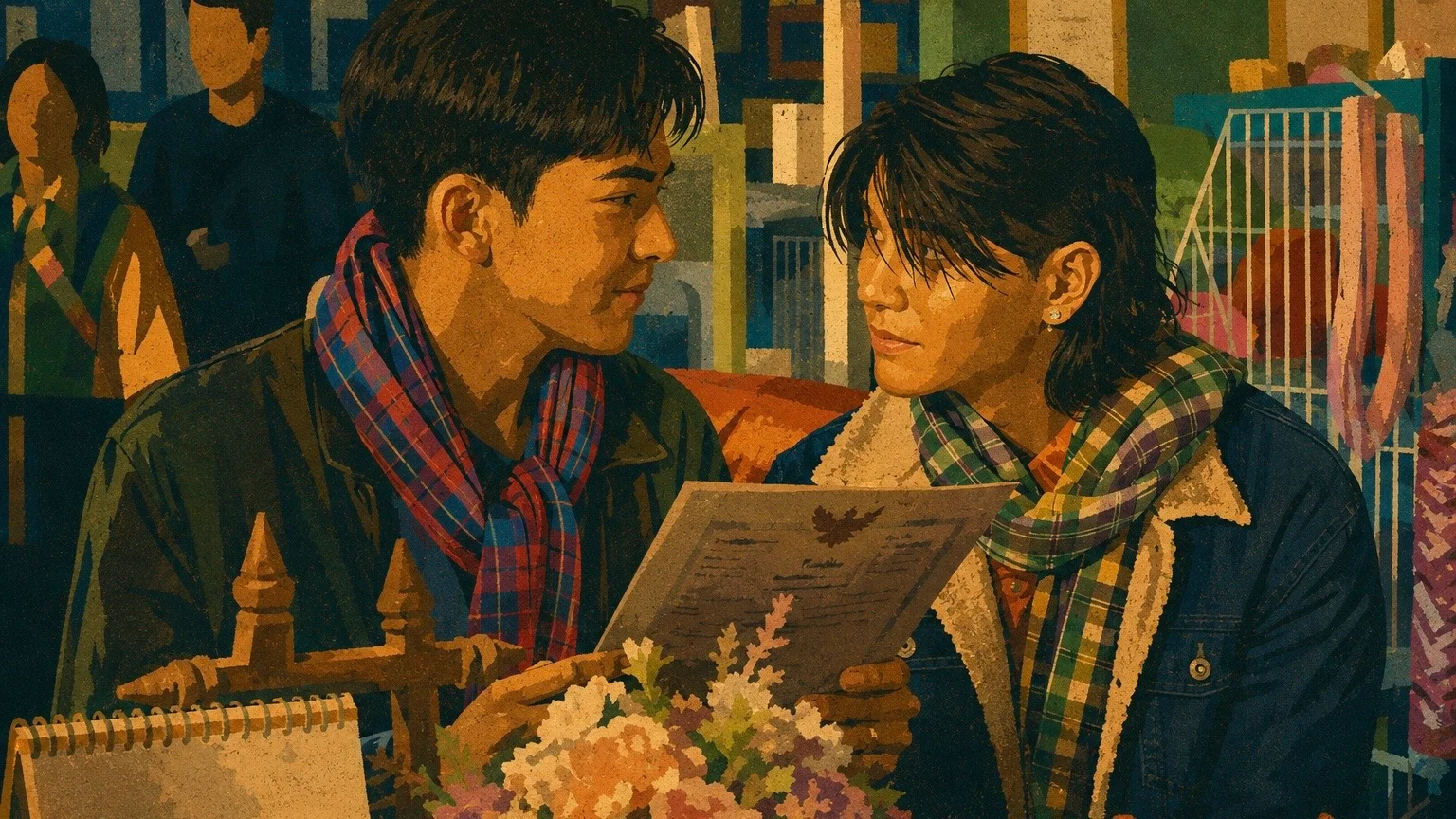
Boss Kuno’s work occupies an interesting position between BL, LGBTQ+ drama, youth television, and queer cinema.
I Told Sunset About You emerged within an industry shaped partly by BL audiences and actor pairings, but its storytelling is closely aligned with intimate coming-of-age drama. Gelboys more openly embraces the contemporary BL ecosystem while examining queer youth culture through a specific generational lens. The Paradise of Thorns is an adult theatrical drama involving grief, inheritance, class conflict, and revenge.
Treating all three projects as identical would flatten what makes them distinctive.
Their connection lies less in format than in perspective. Each story asks how queer desire interacts with a particular stage of life and a particular environment.
For Teh and Oh-aew, the central question is how to recognize and articulate desire.
For Thongkam, it is whether love without institutional protection can secure a shared life.
For the characters of Gelboys, it is how to establish intimacy when identity and romance are always being performed, interpreted, and renegotiated.
What makes a Boss Kuno story recognizable?
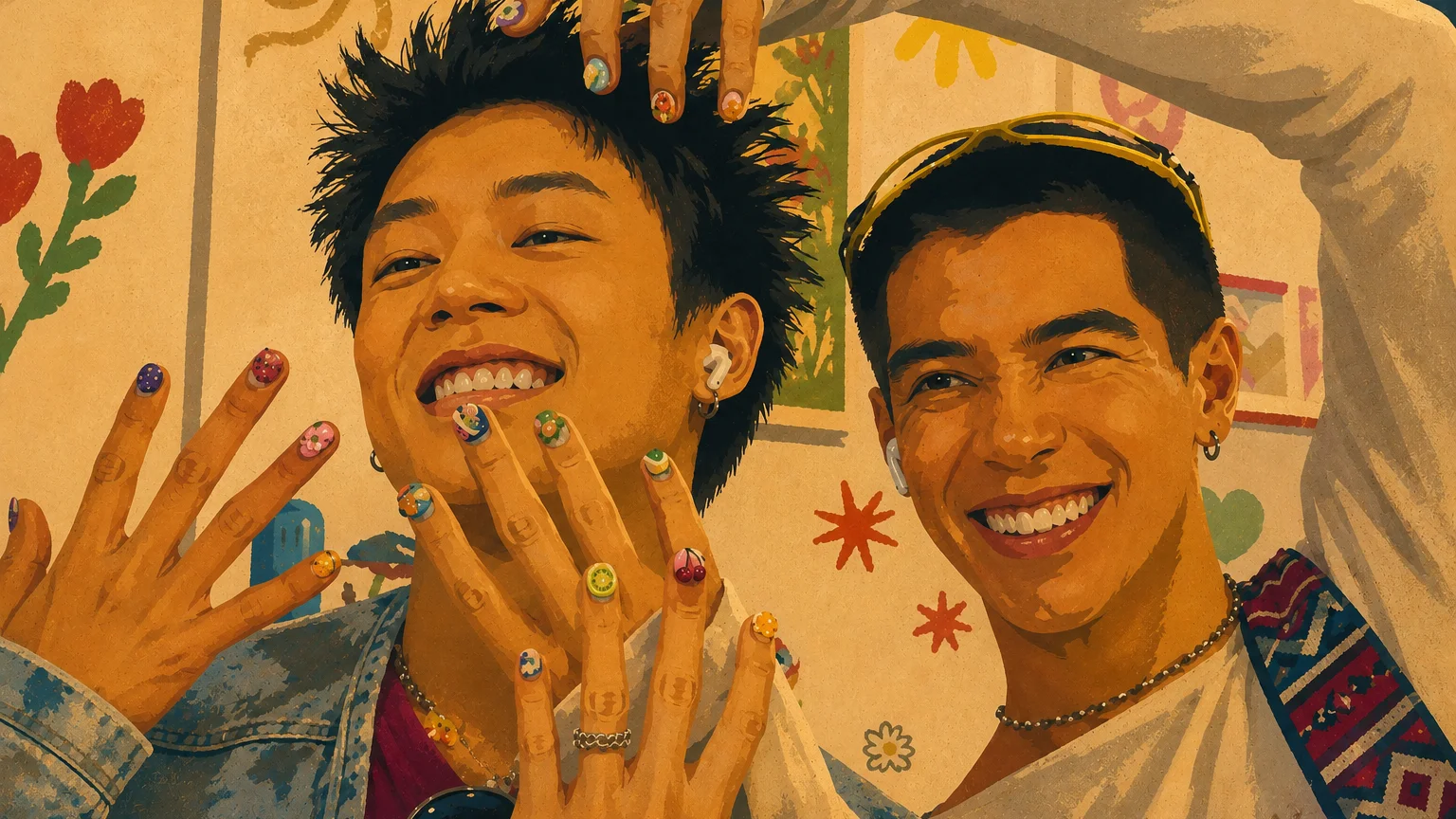
Boss Kuno’s projects do not share one visual formula or narrative structure, but they repeatedly contain several defining qualities.
Their locations feel lived in rather than interchangeable. Their characters are allowed to be emotionally contradictory. Romance is connected to identity but also to family, economics, technology, culture, and power.
His work is also attentive to the objects through which people express attachment. A place, a piece of fruit, a phone, a school uniform, a nail design, or a shared business can carry emotional meaning that the characters themselves cannot fully explain.
Most importantly, his queer stories rarely suggest that love alone solves everything.
Love can offer recognition, transformation, and belonging. It can also expose insecurity, inequality, and the limits of what two people can protect from the world around them.
Where to begin

For viewers new to Boss Kuno’s work, I Told Sunset About You remains the clearest starting point. It offers an intimate coming-of-age story grounded in place, memory, and the painful uncertainty of first love.
Gelboys is the next choice for viewers interested in contemporary youth culture, undefined relationships, and the influence of social media on queer identity.
For a darker adult story, The Paradise of Thorns expands Boss’s recurring interests into questions of property, class, grief, and legal recognition.
Earlier projects including Project S: Side by Side and My Ambulance provide additional context for the character-driven television work that preceded them.
Together, these stories reveal a director who has continued to examine queer life without reducing it to one experience. Boss Kuno’s characters may be falling in love, fighting for what they built, or attempting to define a relationship in real time.
They are all, in different ways, still coming of age.